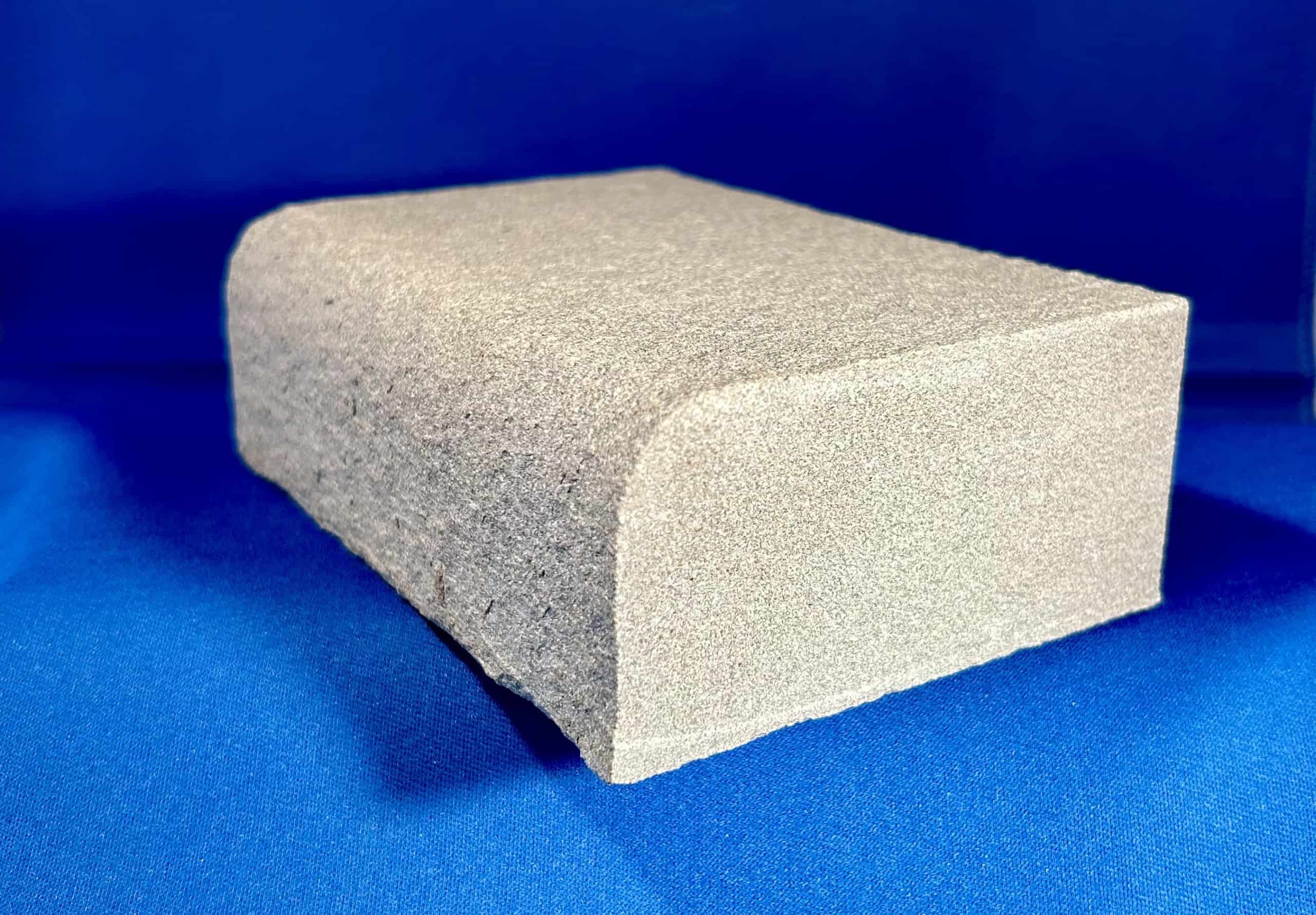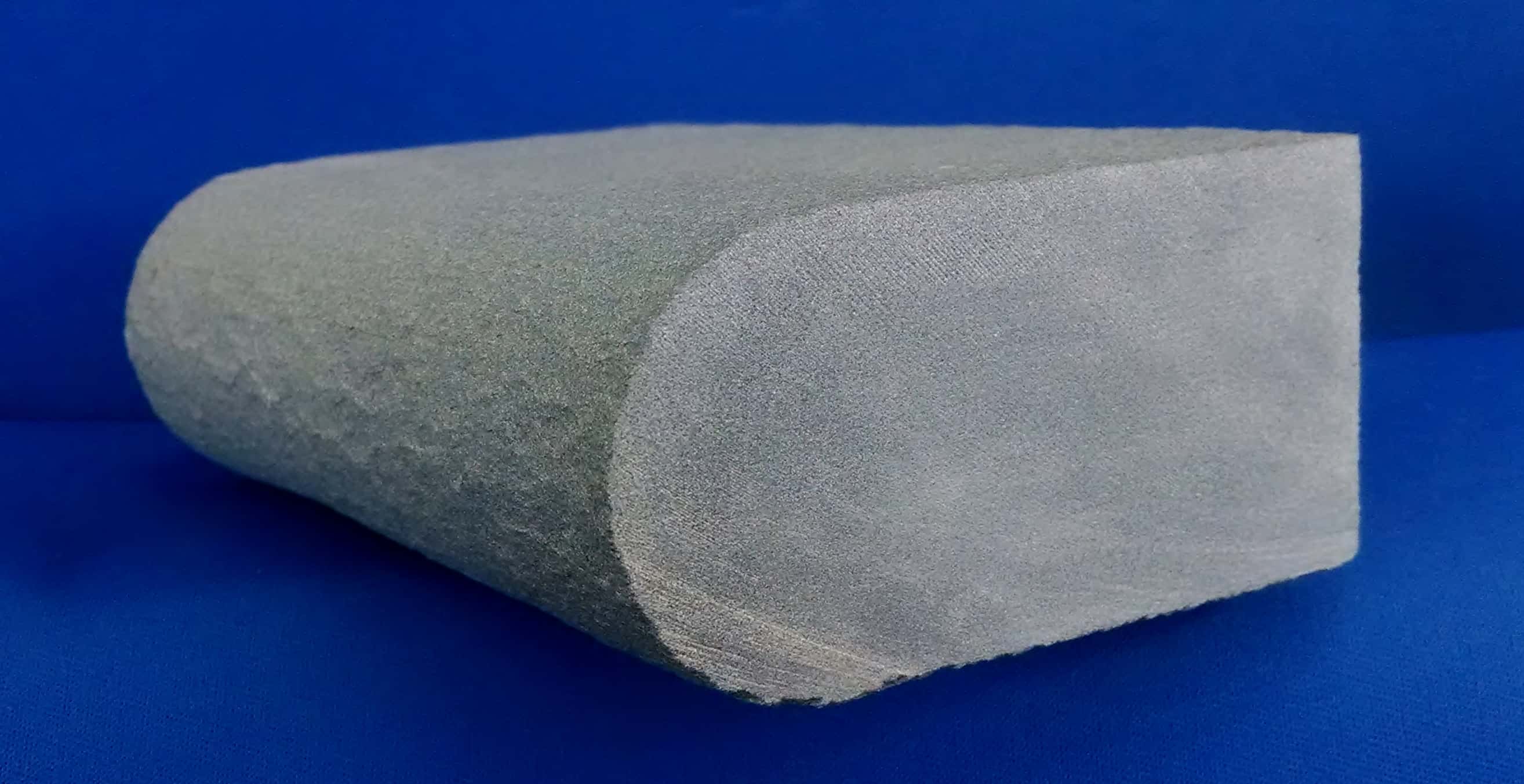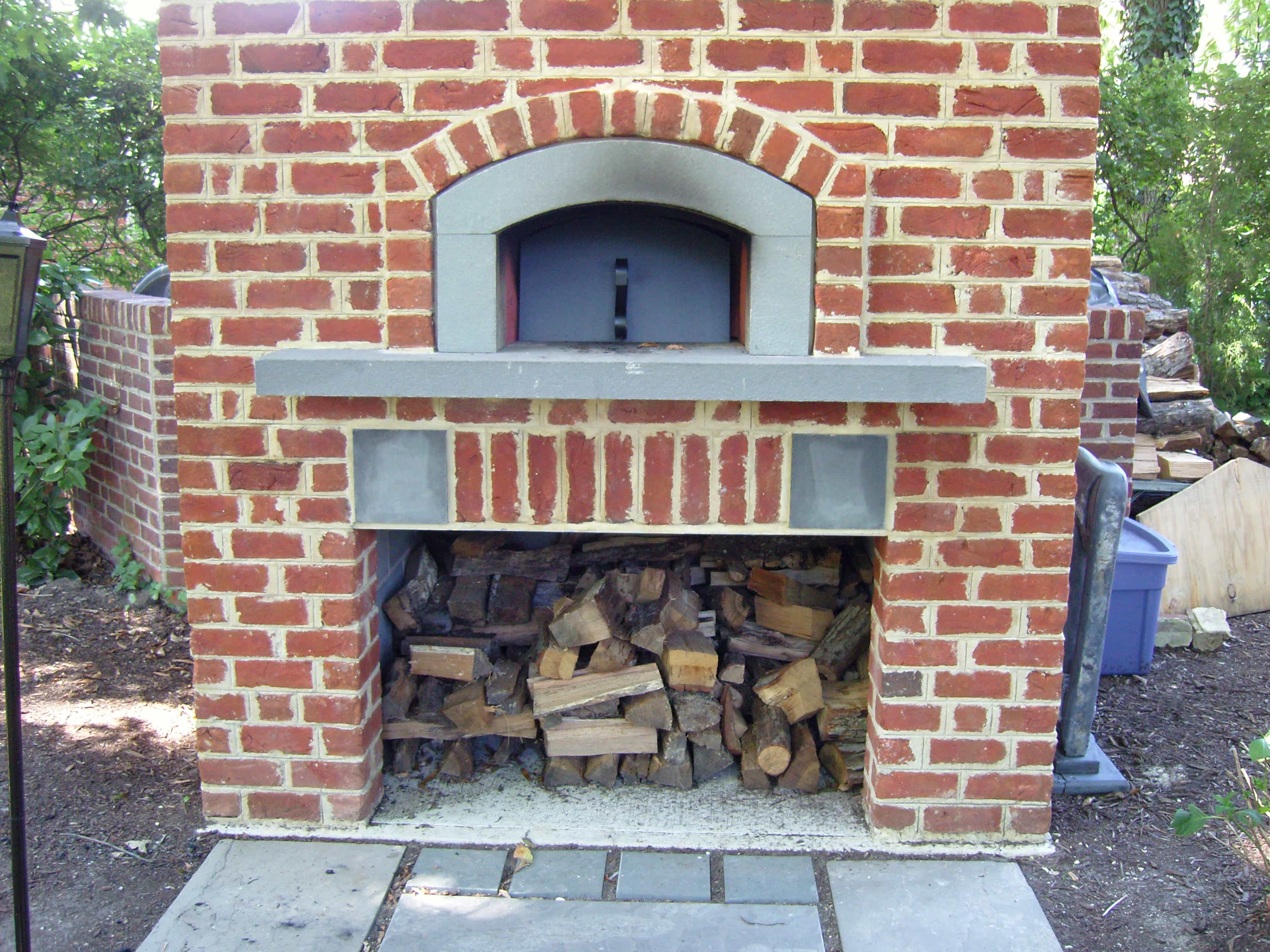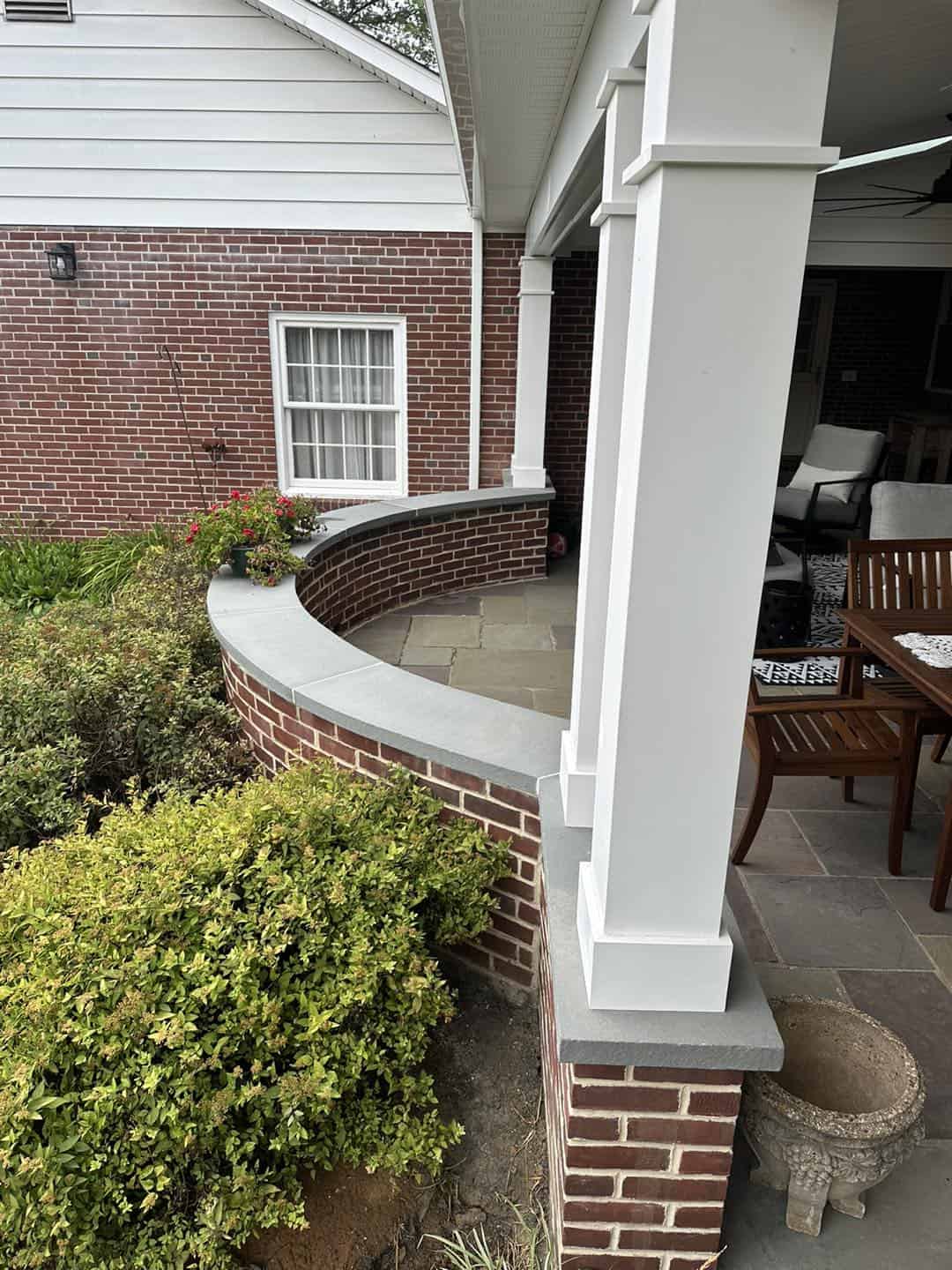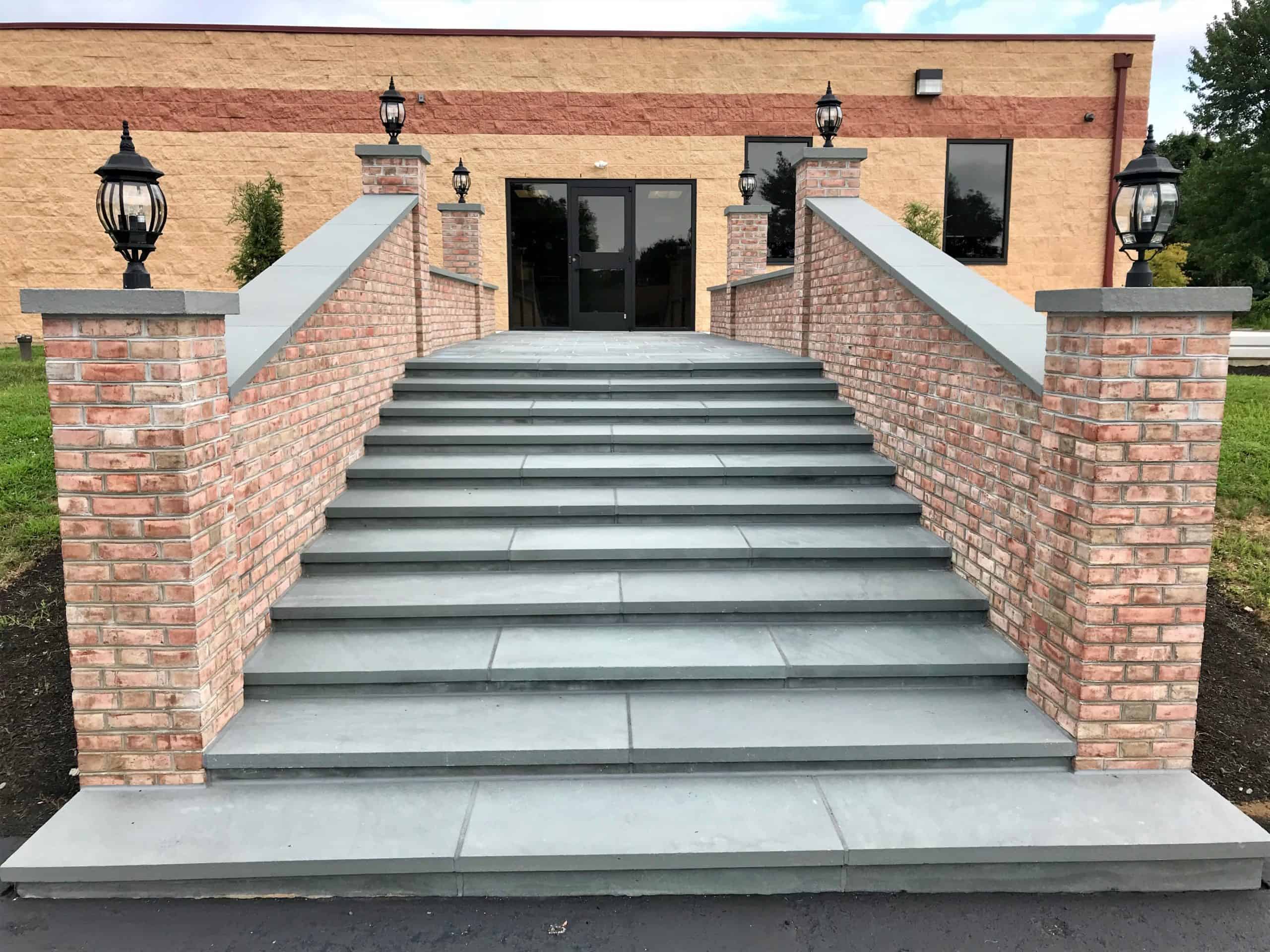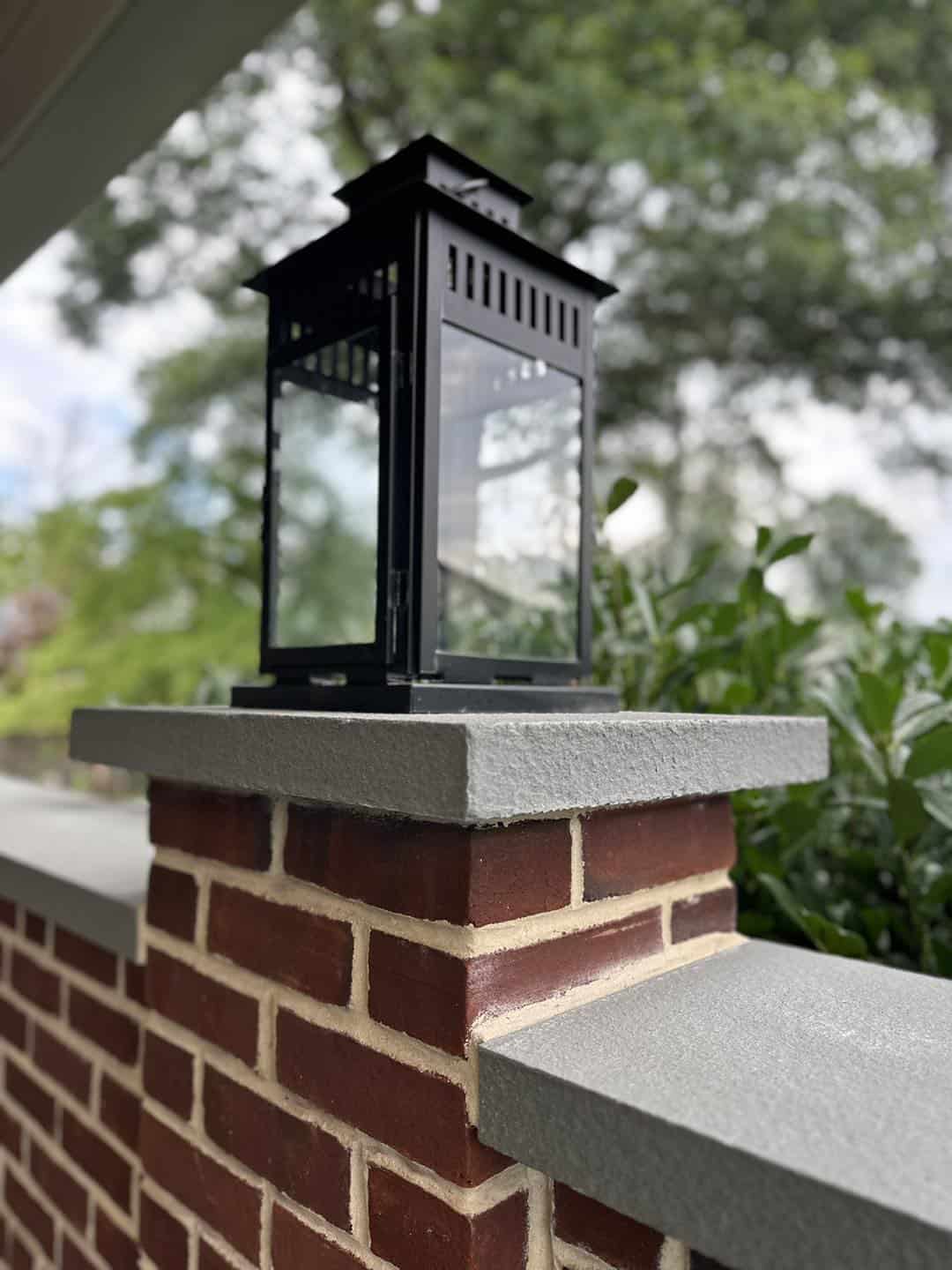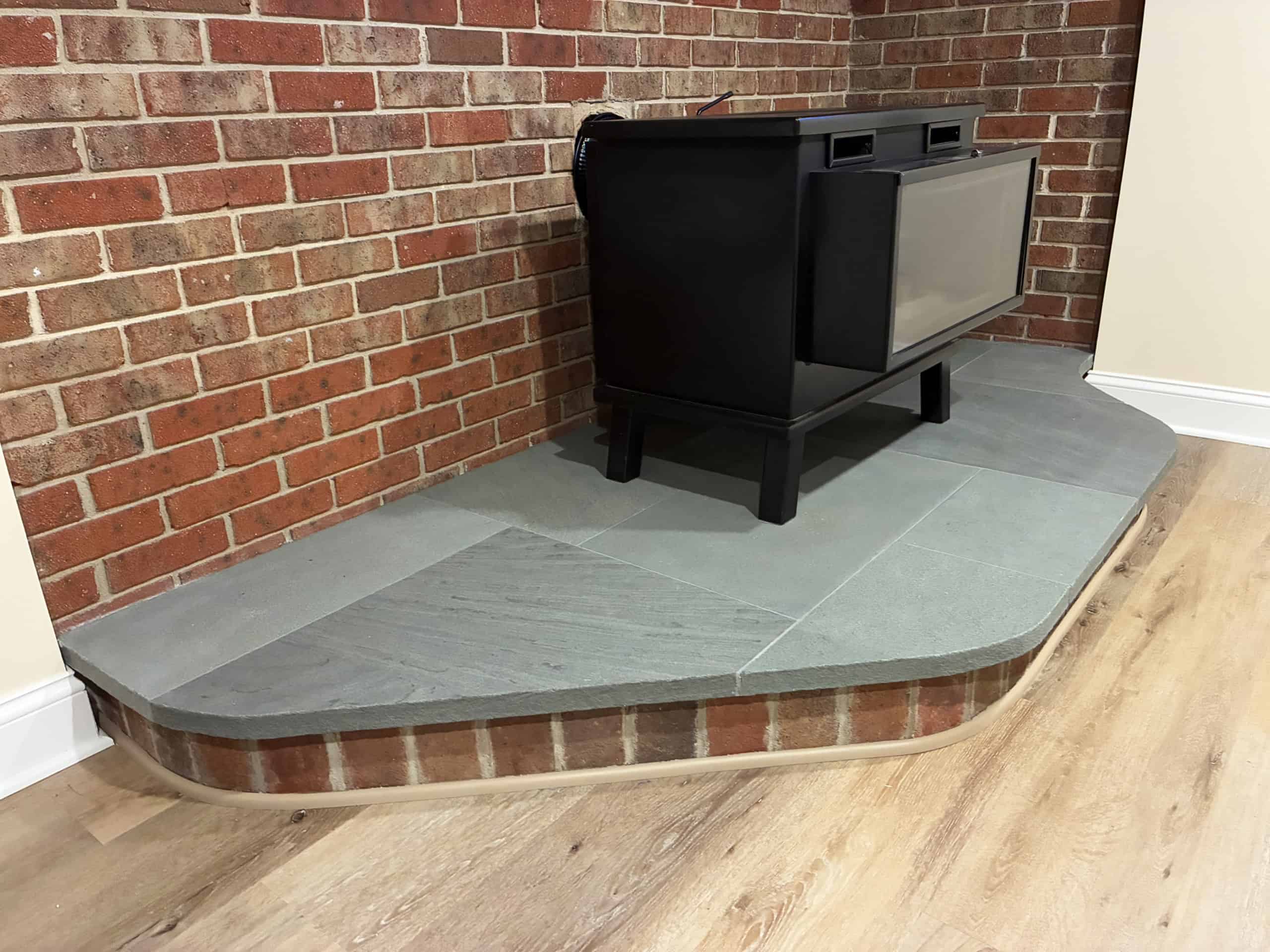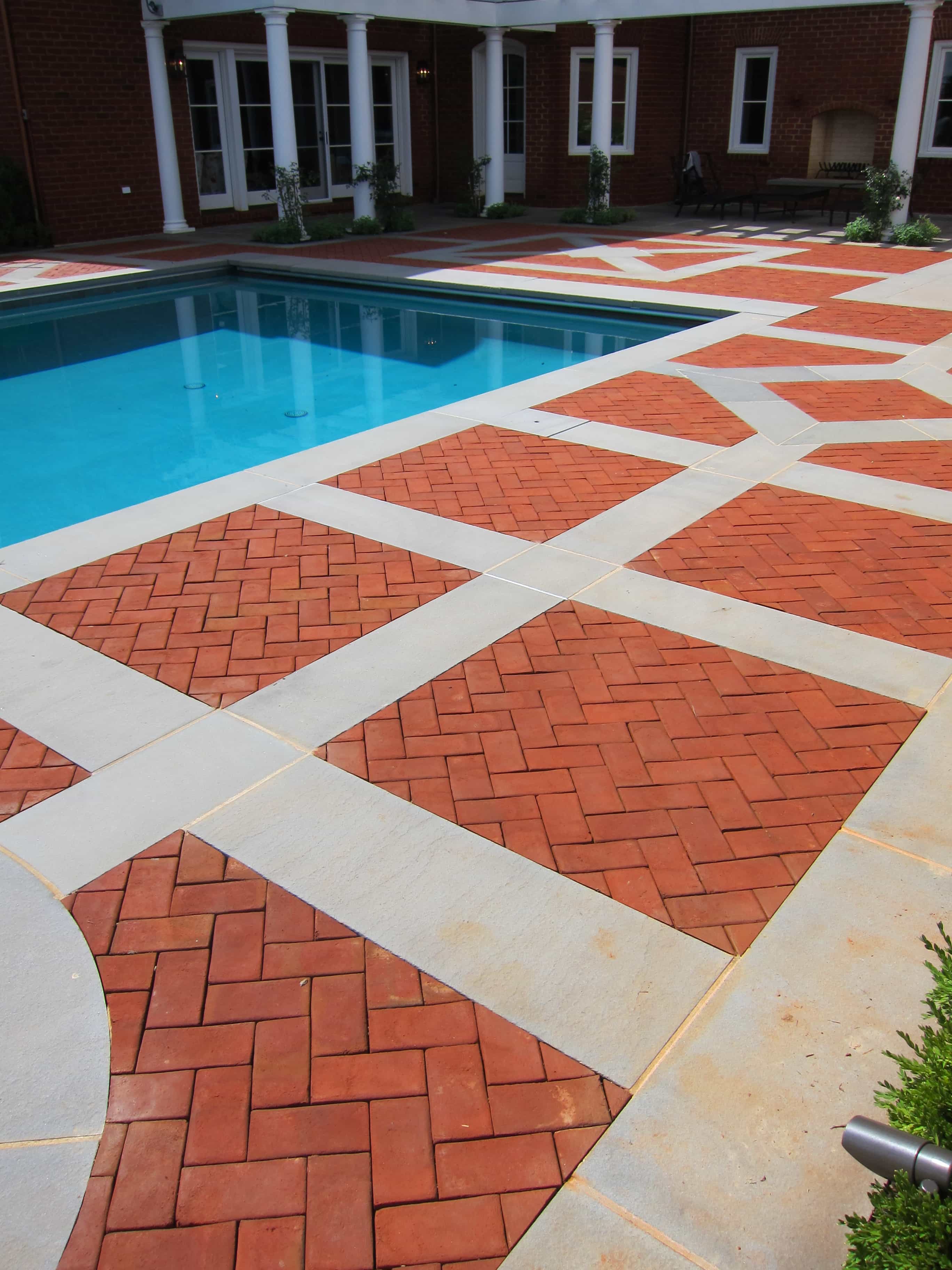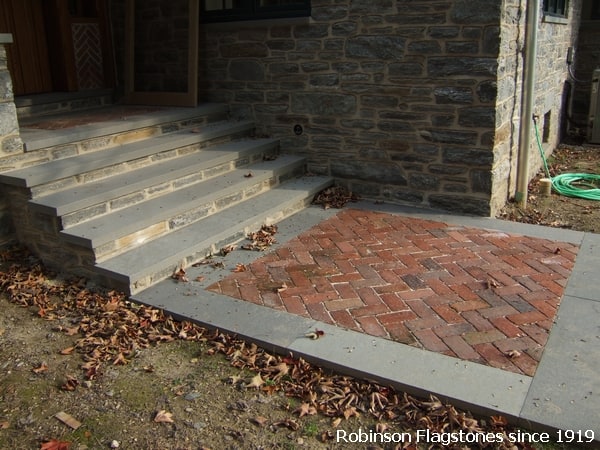
People often ask us if bluestone will match their existing brick homes or masonry, and the answer is a resounding YES! Bluestone treads and brick go together like rum and coke, or maybe peanut butter and jelly is a better simile, either way, it’s a great combo.
The neutral bluish-gray color of thermal bluestone treads matches extremely well with almost any shade of brick. The two materials really compliment each other well in almost any project. Bluestone treads look great with brick risers, brick landings look good with bluestone borders, and bluestone accents can be used on varying specialized applications such as pizza ovens, mailboxes, fireplaces, etc.
In this post I will be going over how to install a flagstone patio. This project was a “Dry-Set” flagstone patio. I used quotation marks for the phrase dry-set because there will be Portland cement and some water used with this setting method.
Materials
Used:
Average 1 ½” Thick Flagstone
Concrete Sand
2A Modified Crushed Stone
Shovels
Garden Hoe
Brick & Block Trowel
Rubber Mallet
Tamper
Level
Wheel Barrow
5 Gallon Buckets
Portland Cement
Sponge
Grinder with Diamond Wheel
Polymeric Sand
Broom
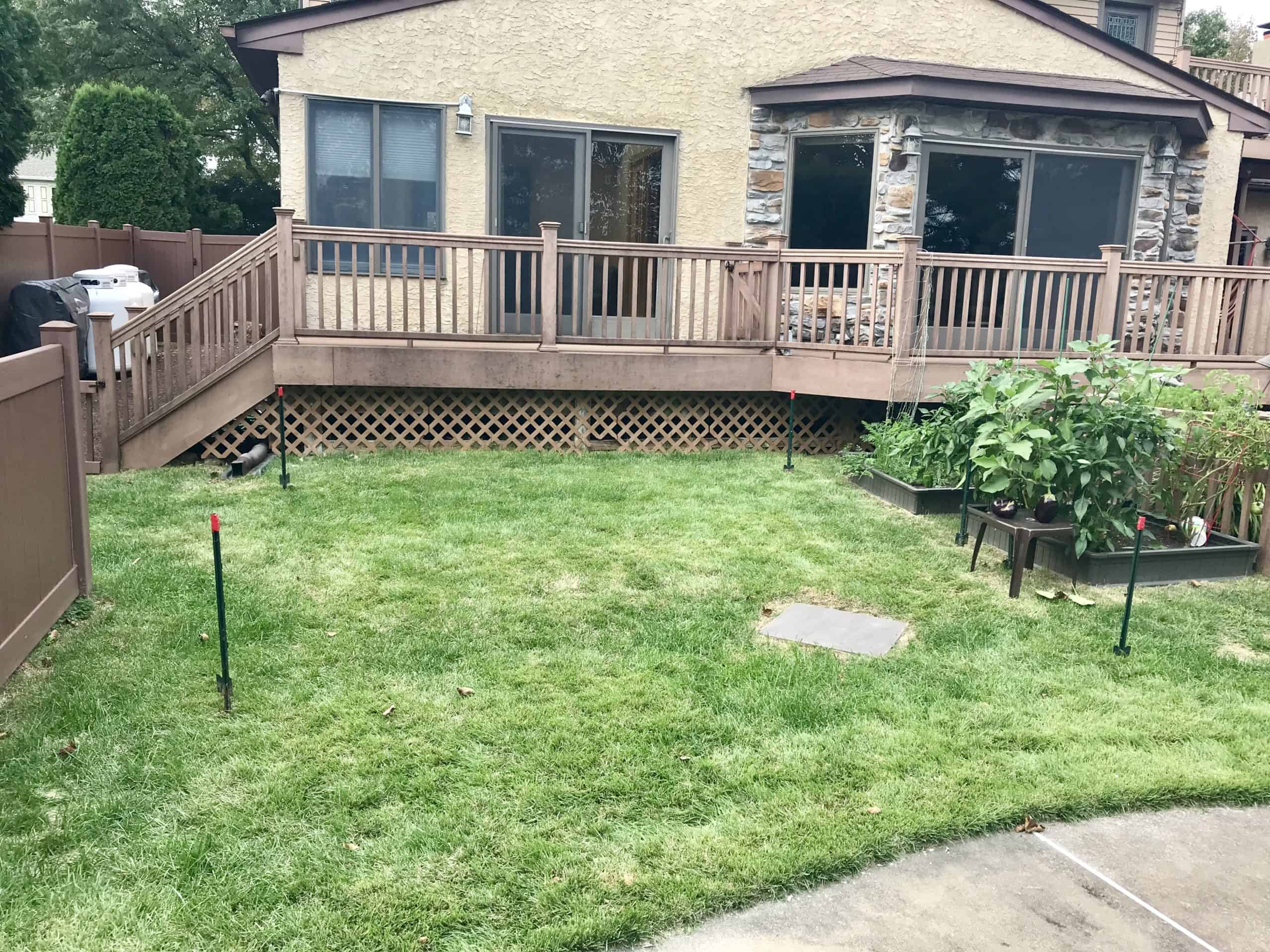
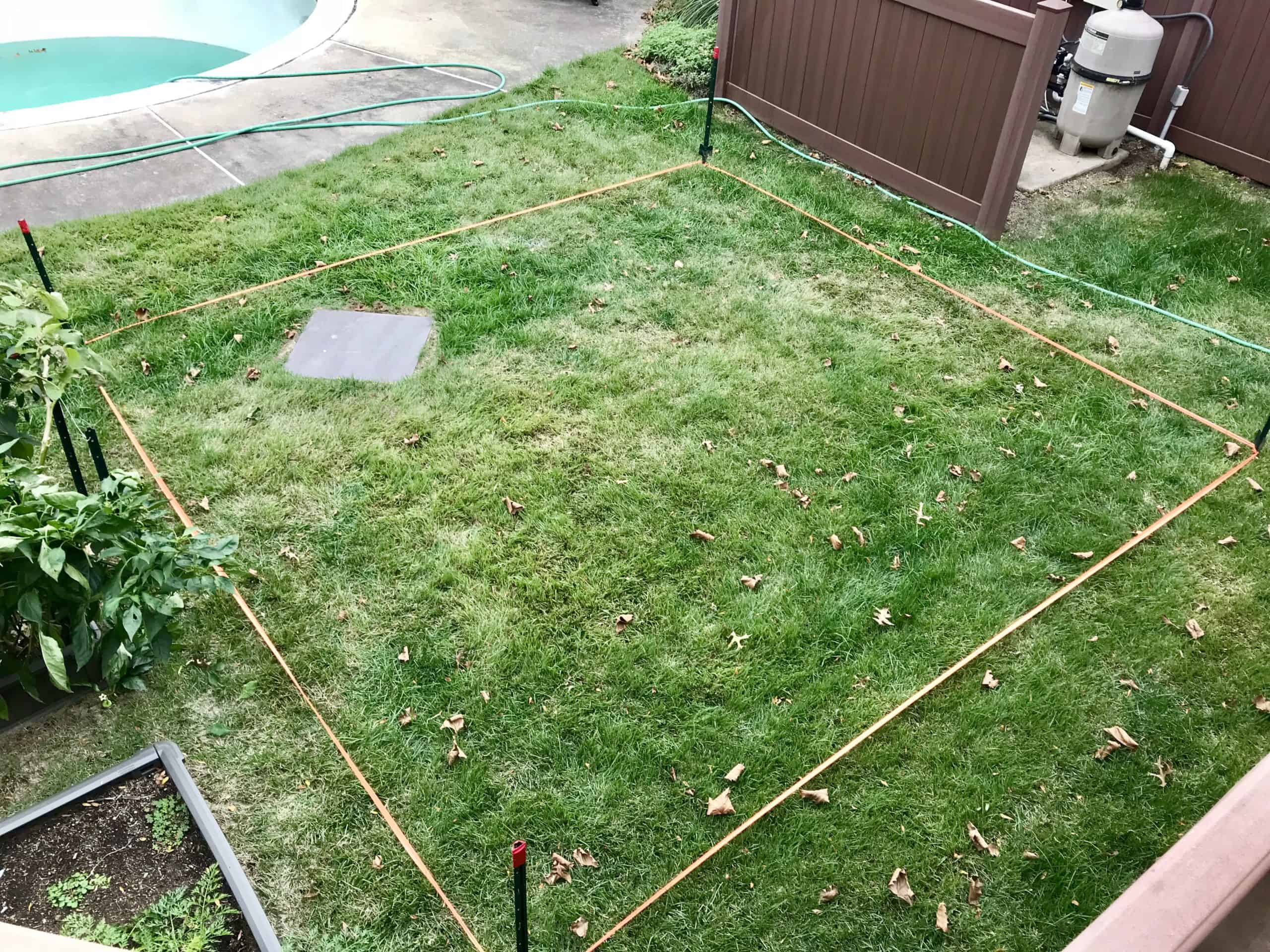
My first step was to identify the actual area where I wanted to put this patio. I staked off a (somewhat) square 12’-6” x 12’-6” area in the yard and also taped it off for visual aesthetics. The finished size of the patio will end up being a nominal 12’-0” x 12’-0” dimension, but I wanted a little extra room excavated out along the edges in case I needed more room to work.
Now
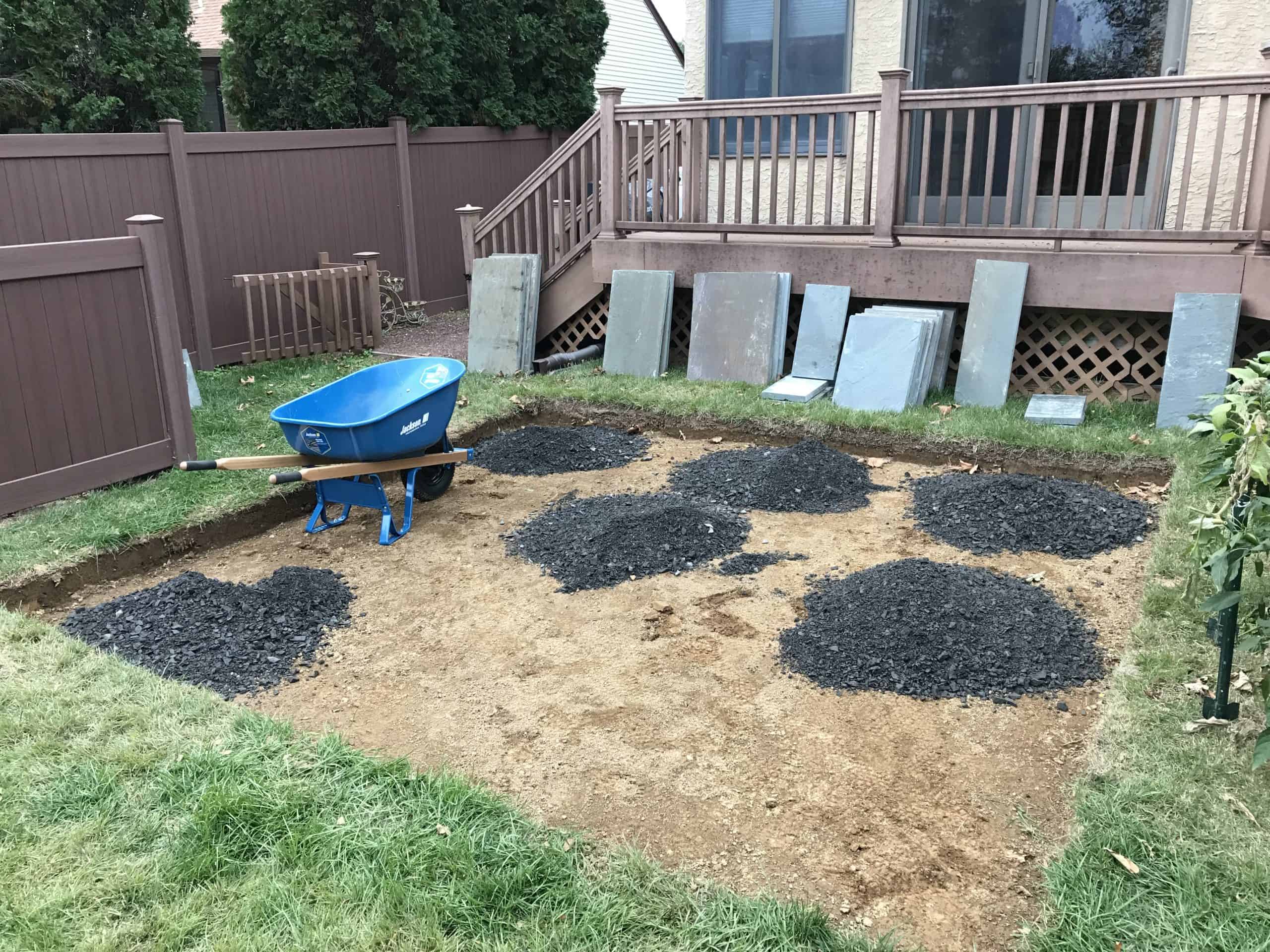
the work begins, time to dig. To accommodate the depth of my modified stone
base, setting bed and flagstone thickness, I dug the whole area out to an approximate
7” depth. That works out to roughly a 4” layer of the modified (tamped at 2”
intervals), about an 1 ½” layer for my setting bed, and the flagstone averages
about 1 ½” in thickness. When doing your own patio or walkway project, just let
your local supplier know the depth, length and width of your area and they will
be able to tell you the correct amount of cement, sand, and modified stone
you’ll need.
My
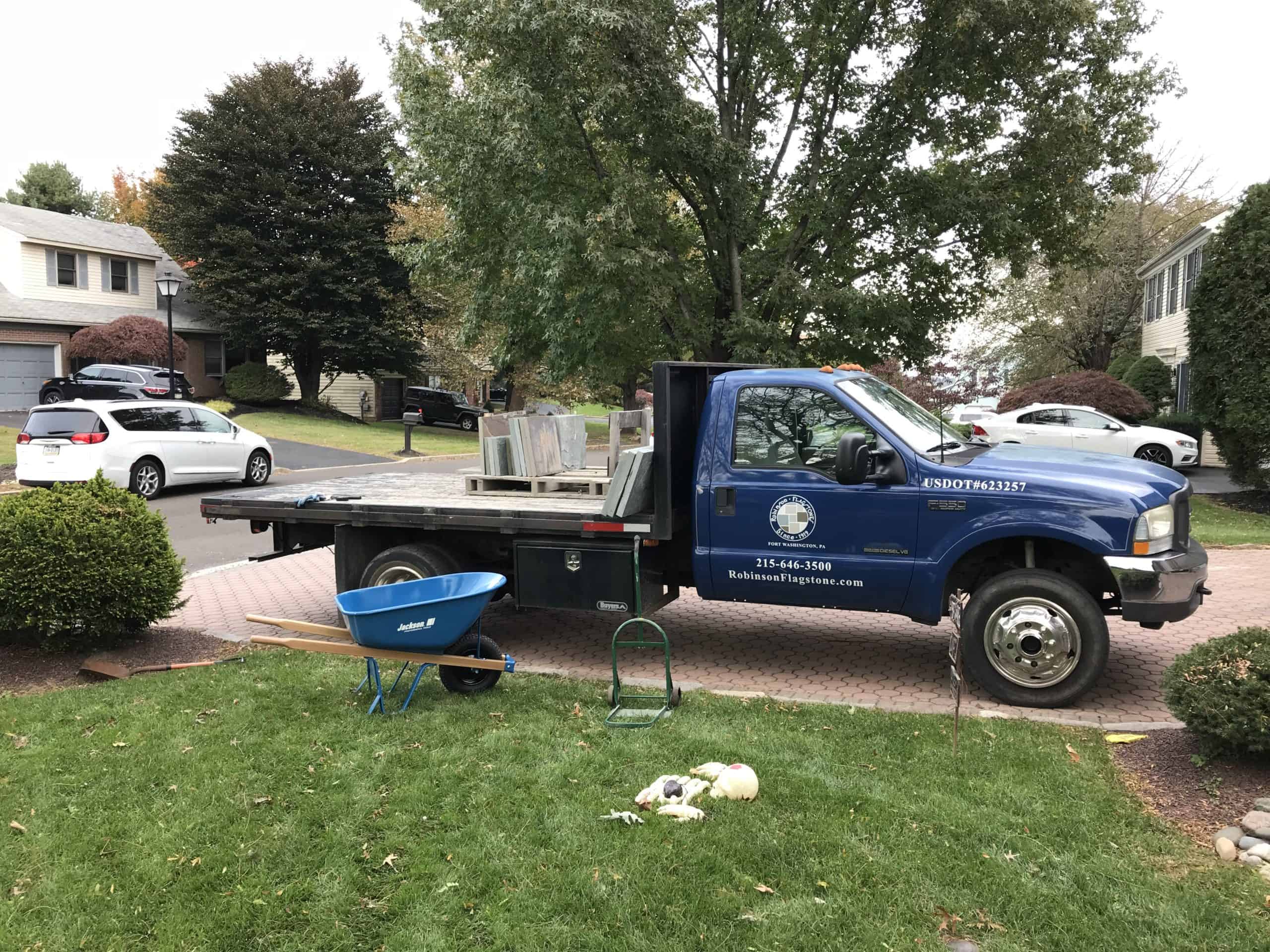
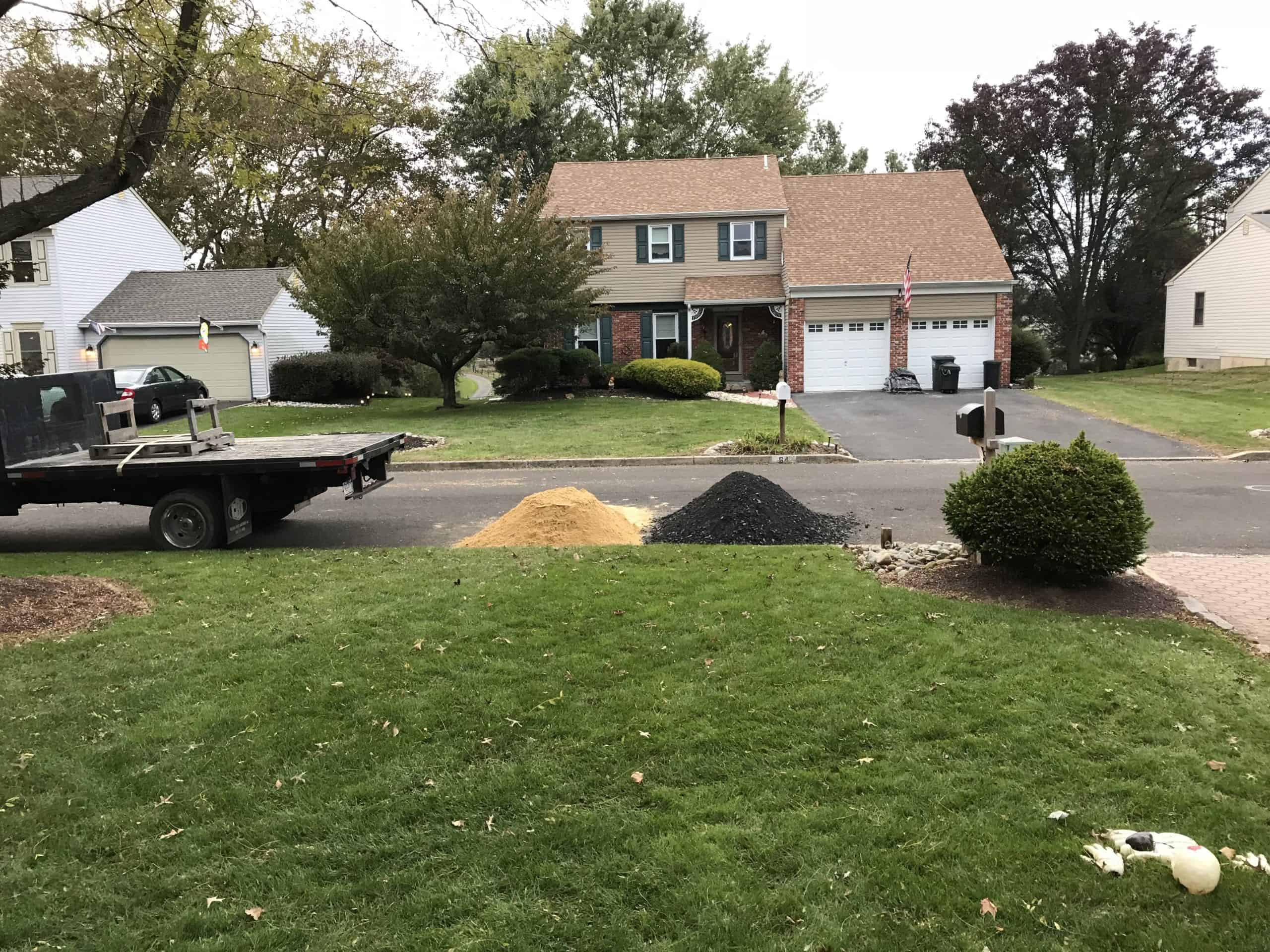
sand, modified, cement, and flagstone was all delivered to the front of the
house and had to be brought out back with a wheel barrow by hand, which was…
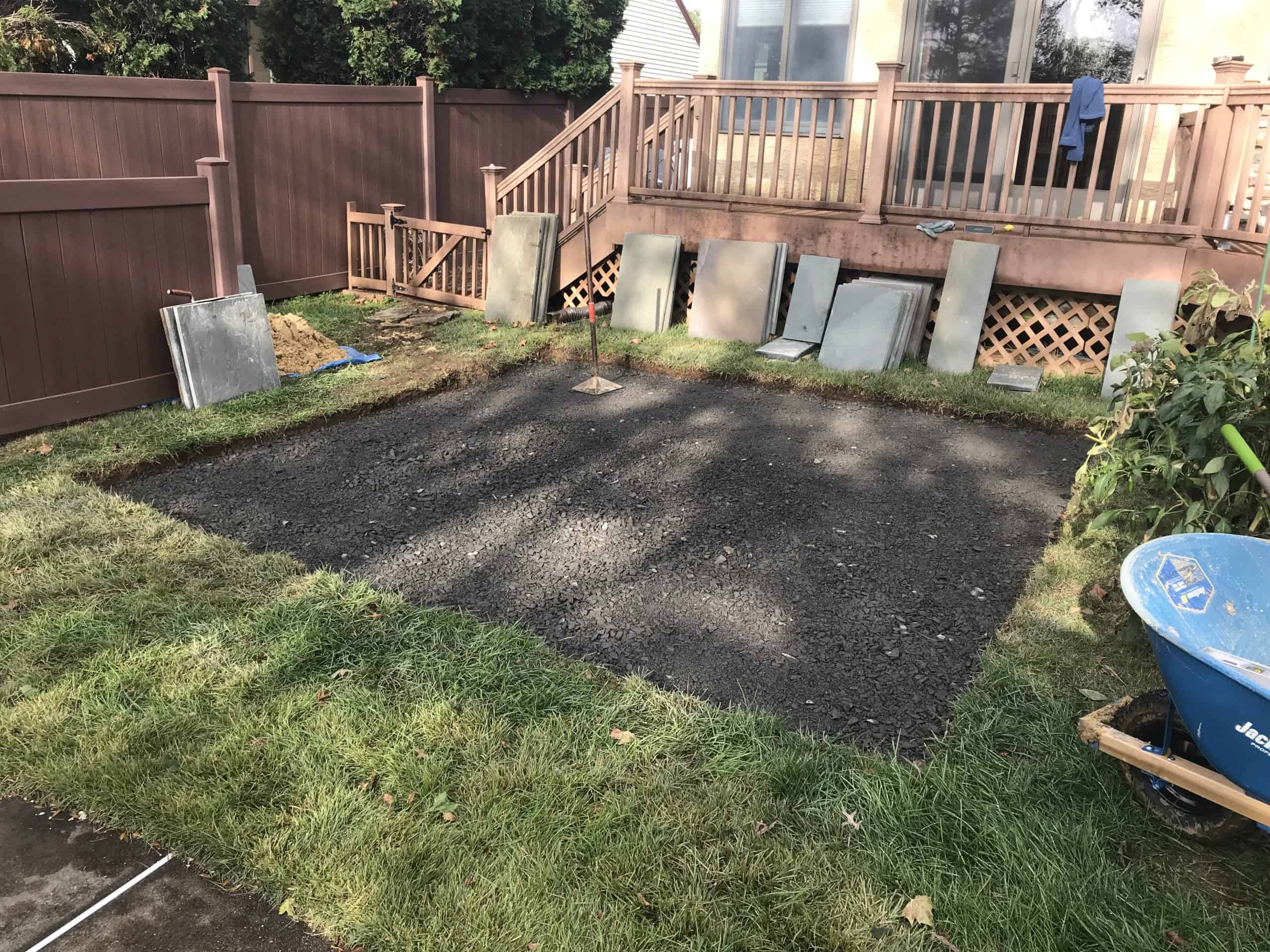
fun. The 2A modified crushed stone was then laid down in two 2” thick layers.
Each layer was firmly tamped down and compacted tight.
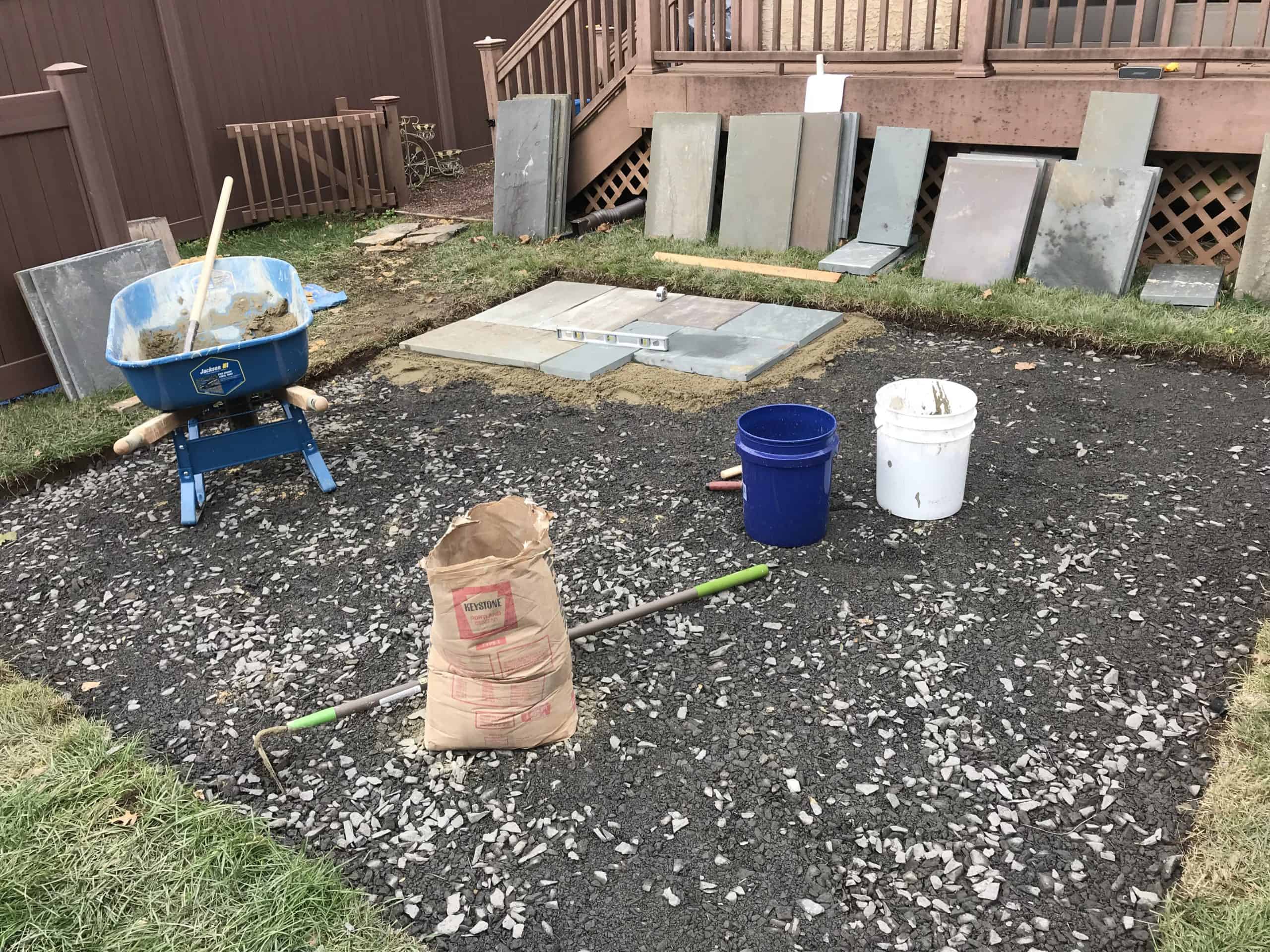
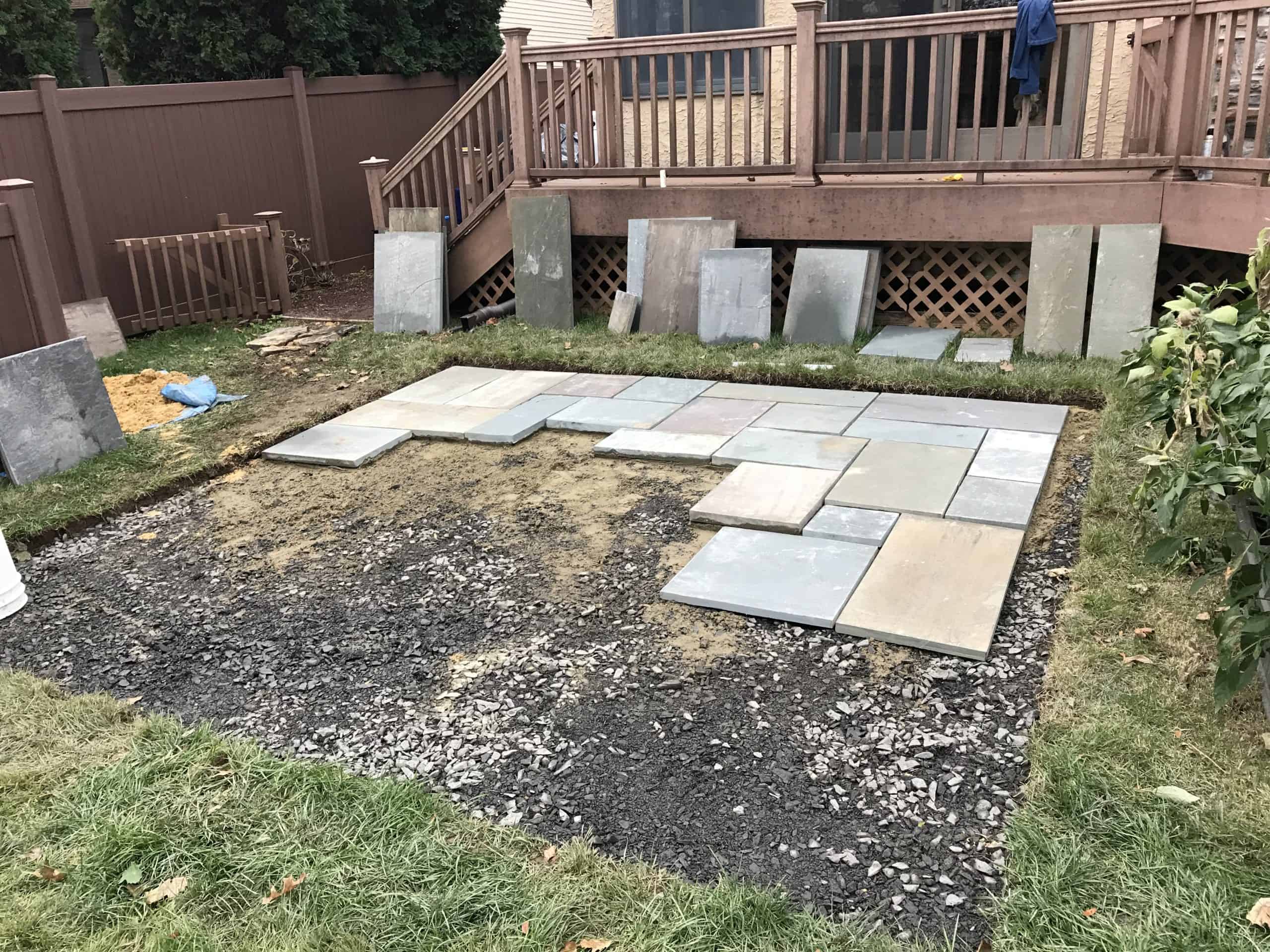
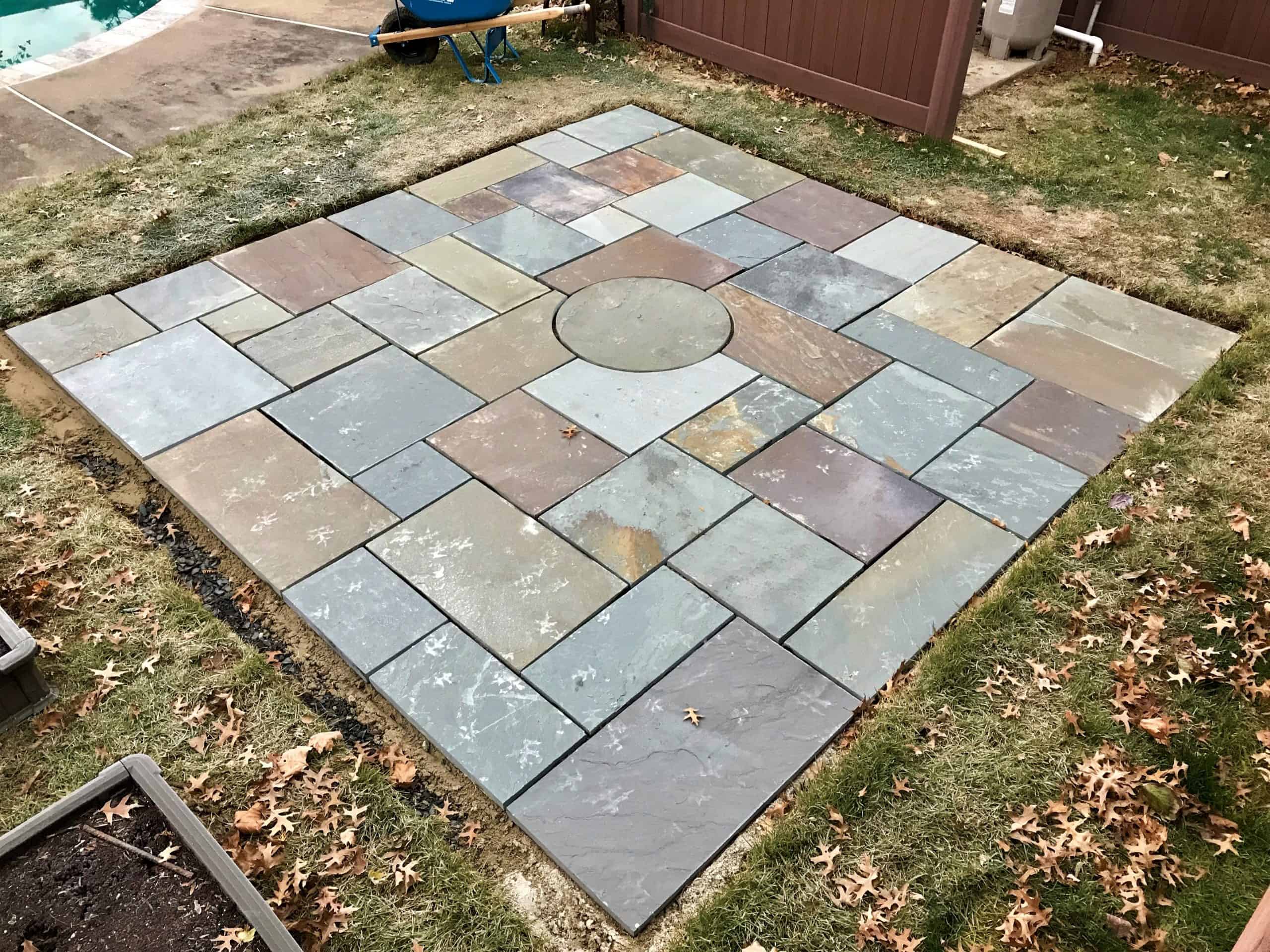
After the modified sub-base was in and tightly compacted, it was finally time to start setting the flagstone. I used full color range, natural cleft flagstone https://robinsonflagstone.com/pa-flagstones/full-color-range-natural-cleft-pa-flagstone for this project. Each piece of flagstone will be set with a ½” wide joint. I used a numbered setting sketch for this patio which plotted out the proper location of each individual stone. I highly recommend using a sketch, the less brain power that needs to be utilized in the field, the better. It really makes life easier knowing what size piece of stone you need to grab next to keep chugging along.
The
setting bed I’m using (sometimes known as “dry-pack”) consists of 4 parts
concrete sand to one part Portland cement. Four shovelfuls of sand, and one big
shovelful of Portland go in the wheel barrow and are vigorously mixed together
with a garden hoe. Only add enough water to keep your mix slightly damp. You do
not want the mix dripping or oozing with over saturation. *Do NOT use any
lime in your setting mix. Lime can seep up thru the setting bed and create white
“halos” around the stones, for this same reason avoid using pre mixed bags of
concrete. Mixing your own setting bed will make you feel great and
vitalized!
Lay
down about an 1 ½” thick layer of the setting mix in the area you will be starting
your first few stones. Grab your first piece of flagstone and lay it down in
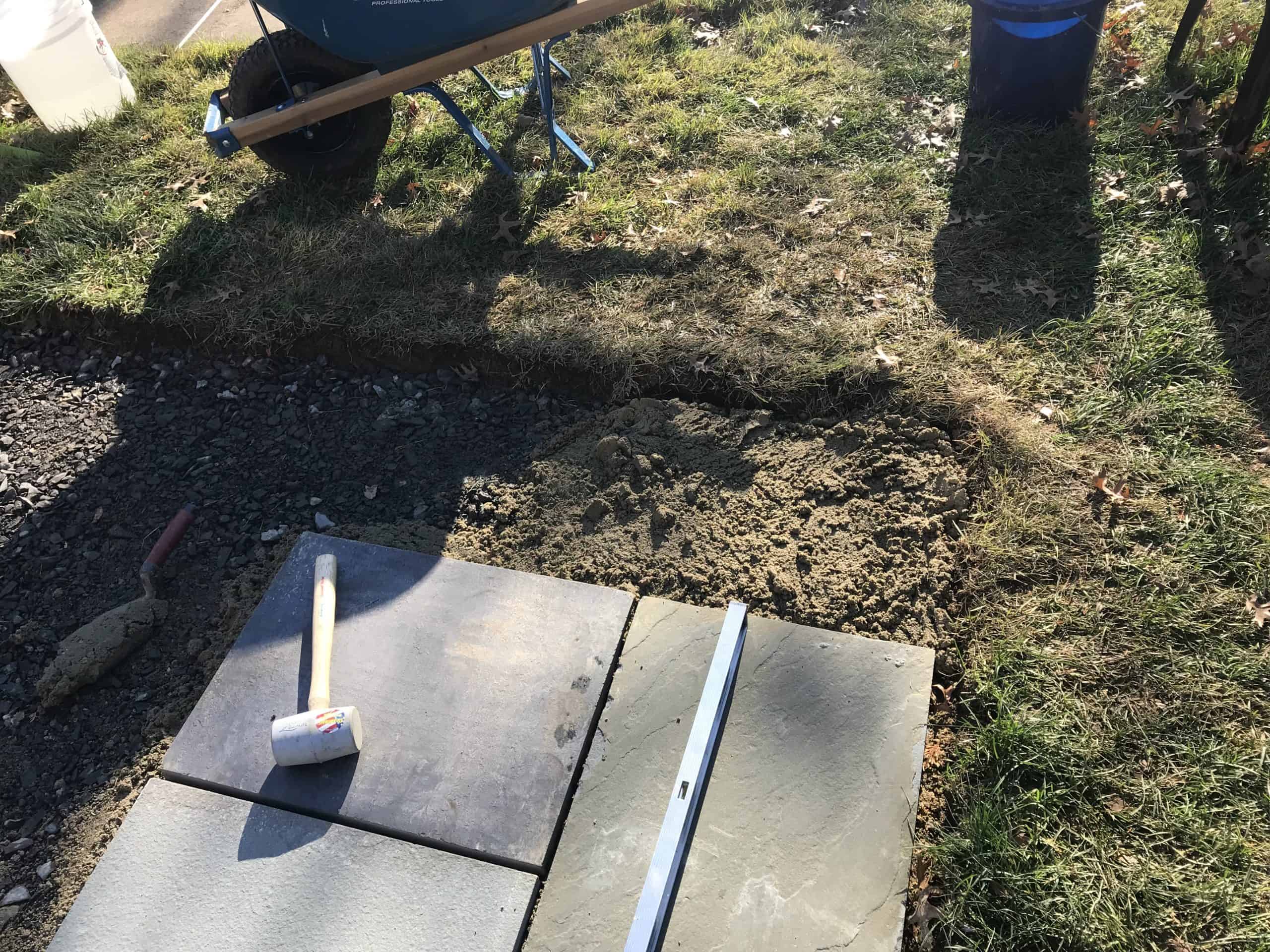
the setting bed. Use your level and be sure to pitch the stones slightly away
from the house (rule of thumb is ¼” of pitch for every 10 feet of patio or
walkway). One of the joys of setting natural cleft flagstone is that every piece
varies in thickness. This means that you will constantly be picking up and
re-setting pieces until you are at the desired level with adjacent stones. In
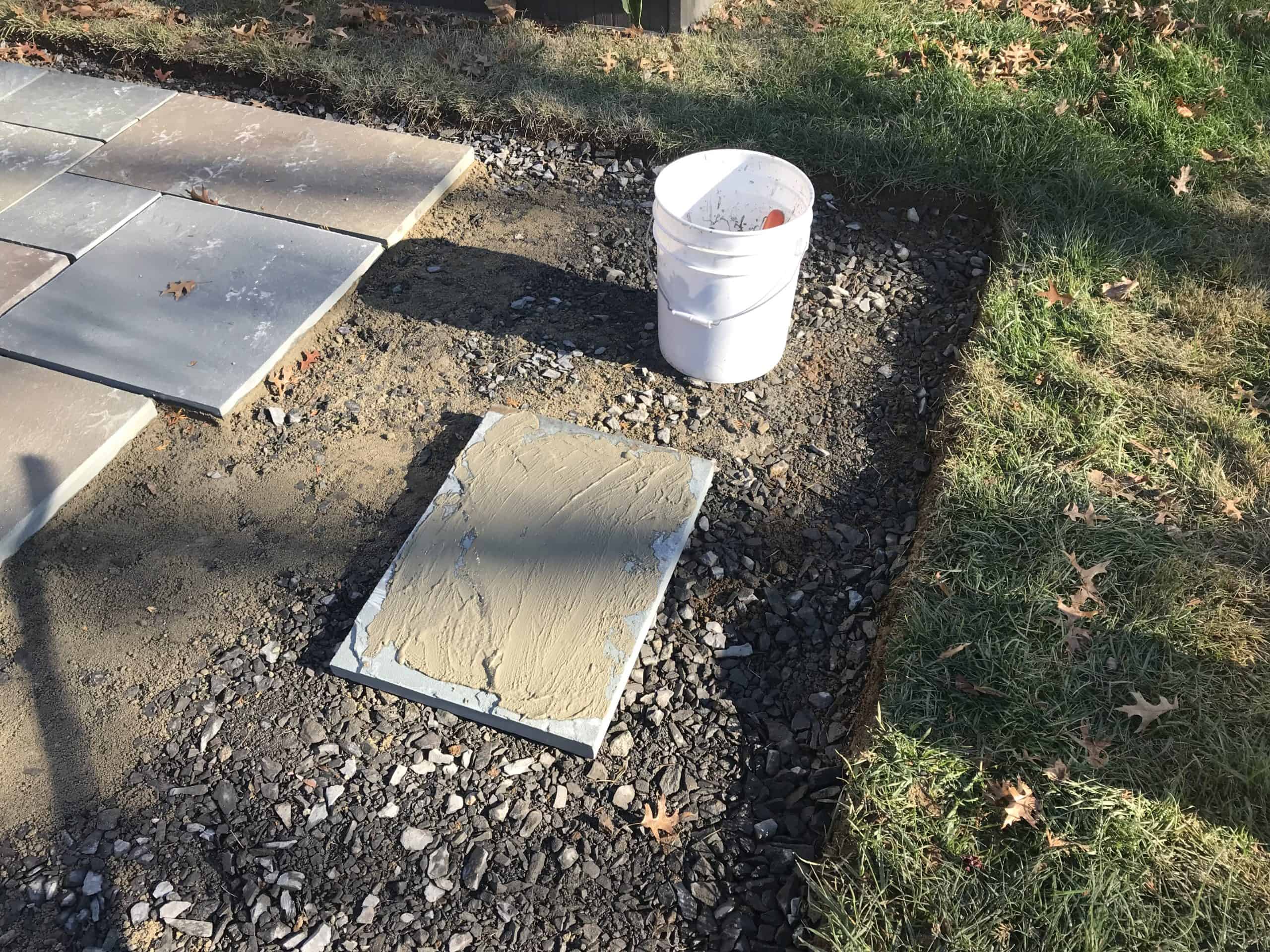
one of your empty 5 gallon buckets, add a shovelful of pure Portland and a few
ounces of water to create a cement slurry with the consistency of mayonnaise. This
slurry will be used to butter the back of each stone so that they bite into
your 4 to 1 setting bed. Use the trowel or even an old brush to cover the entire
back of the stones and try not miss any surface area. I dry lay the stone
first, then, once level, butter the backs of the stones for adhesion. This is where
the rubber mallet comes in. Use the mallet to beat those stones into place and maybe
relieve some pent up, repressed rage in the process. Keep a bucket of clean
water close at hand so you can wash off any stains you get on the stones with a
clean sponge, and also to wash off your hands as needed.
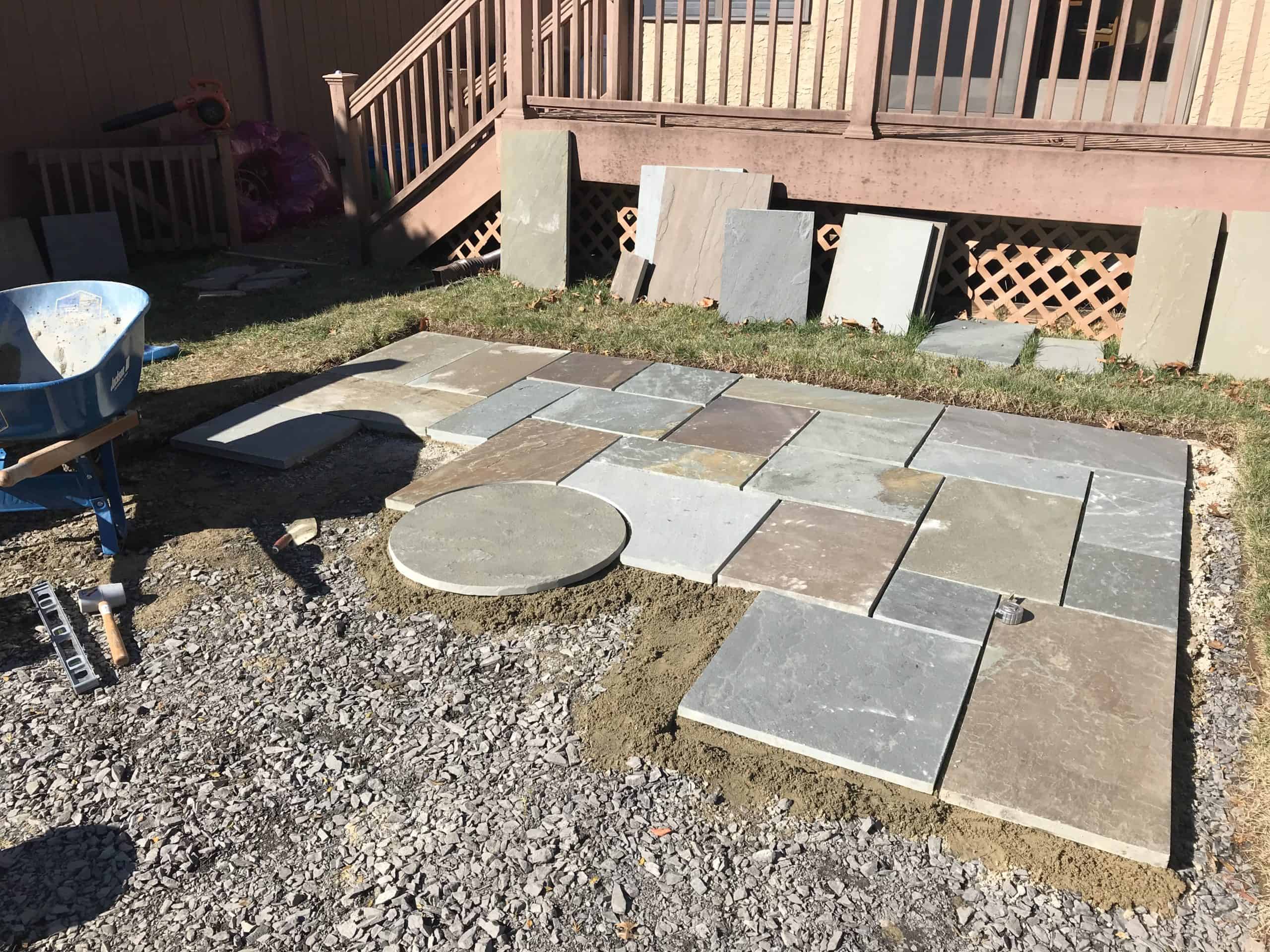
At this point, you’re on stone-setting auto pilot: Dry-lay the stones, level them, butter their backs, savagely beat them with mallet, and make new setting mix as needed. Wash, rinse, repeat.
Natural
cleft flagstone can be slightly out of square and is meant to be laid with ½”
wide joints in between the stones. After all your stone is set & laid you
might see some joints that are a little out of whack. You can use a grinder
with a diamond wheel on it and carefully grind only the top, inside portion of
the joint to correct the joint width. Once the polymeric sand is swept between the
joints you can’t tell the joint has been altered.
After
all your flagstone has been laid accordingly it’s time to fill in the joints.
For this patio I used HP NextGel Polymeric Sand in a gray color. Polymeric sand
can only be swept in on a nice, dry day. This product matched the flagstone
pretty well, and didn’t leave any hazing or discoloration on the surface when
it was swept into the joints, so I was happy with it.
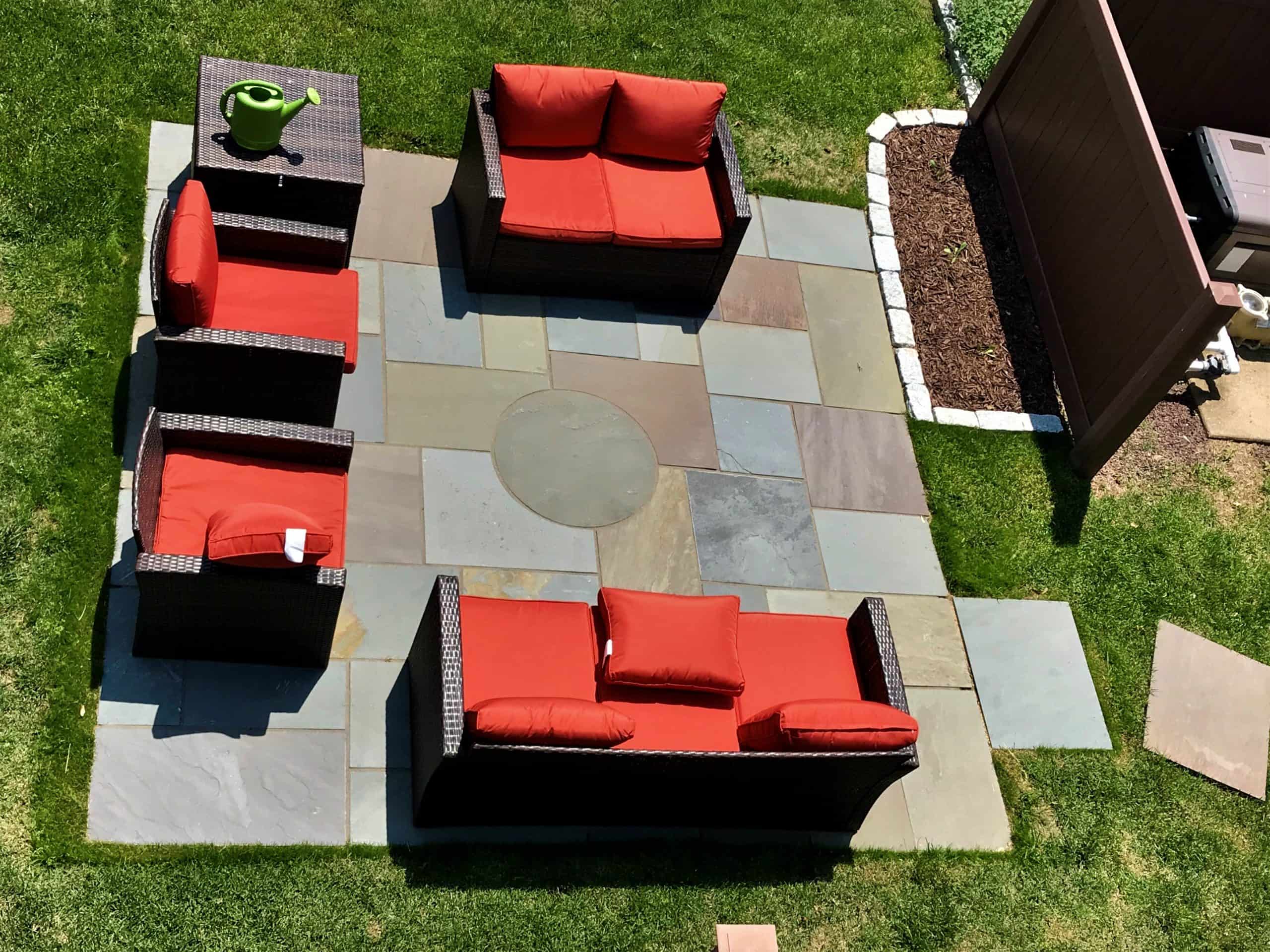
After the patio was complete I added a few stepping stones, and a small Belgian block https://robinsonflagstone.com/pa-flagstones/belgium-blocks lined flower bed. I feel like the red cushions on the furniture really tied the patio together nicely. Feel free to call or email us at Robinson Flagstone if you would like to design and install one of your own.
The Backyard Patio AreaStaked off patio Area12′-6″ x 12′-6″ Excavated areaFlagstone DeliverySand & ModifiedLaying the ModifiedTamping the ModifiedMixing the Setting BedButtering the Backs of StonesLaying StoneStarting to Take ShapeRound Centerpiece is InstalledClose to the EndFinished 12′-0″ x 12′-0″ PatioFlagstone Patio with Furniture and Stepping StonesSetting Sketch- nominal 12′-0″ x 12′-0″
https://robinsonflagstone.com/wp-content/uploads/2020/02/IMG_E2172-scaled.jpg19192560Robinson Flagstonehttps://robinsonflagstone.com/wp-content/uploads/2023/02/Logo-3-300x300.pngRobinson Flagstone2020-02-29 10:02:102025-02-18 08:51:11How to Install a Flagstone Patio